Stomach Cancer Treatment at Basava Hospitals
Advanced, Compassionate Care for Stomach Cancer Patients
At Basava Hospitals, we provide comprehensive, multidisciplinary treatment for stomach cancer (gastric cancer) under the expert care of Dr. Vemuri Prasanna Kumar, our renowned gastroenterologist and oncologist. Using cutting-edge diagnostics, minimally invasive procedures, and personalized treatment plans, we ensure the best possible outcomes for our patients.
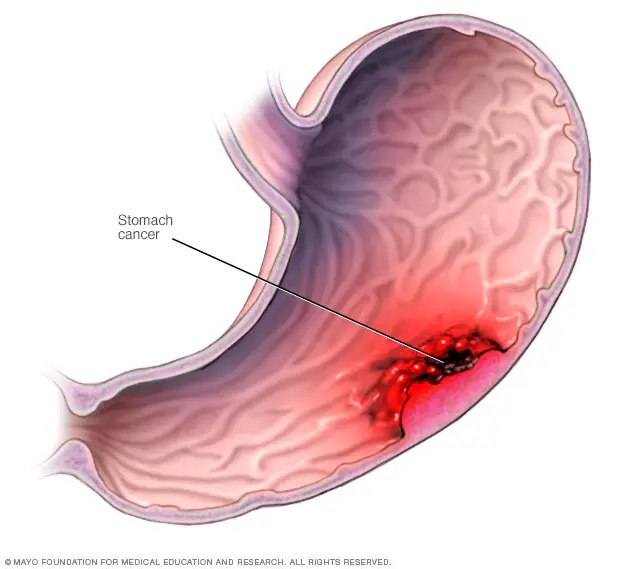
Stomach cancer occurs when abnormal cells grow uncontrollably in the stomach lining. It can develop slowly over years and is often diagnosed at later stages when symptoms become noticeable.
Types of Stomach Cancer
The most common type (90–95% of cases), developing from the cells that form the stomach’s inner lining.
Gastrointestinal Stromal Tumors that begin in special cells in the wall of the digestive tract.
Affects immune system tissue in the stomach wall; less common than adenocarcinoma.
Rare, slow-growing tumors that start in hormone-making cells of the stomach.
Symptoms of Stomach Cancer
Early-stage stomach cancer may show mild or no symptoms, but as it progresses, patients may experience:
Persistent indigestion or heartburn that doesn’t go away with antacids
Unexplained weight loss & loss of appetite without trying
Abdominal pain or discomfort, especially above the navel
Nausea & vomiting, sometimes with blood (may look like coffee grounds)
Difficulty swallowing (dysphagia) that worsens over time
Black, tarry stools (indicating bleeding in the stomach)
Feeling full quickly after eating small amounts of food
Risk Factors
Chronic infection with this bacterium is the strongest known risk factor.
Doubles the risk of stomach cancer, especially upper stomach cancers.
Increases risk, especially when combined with smoking.
Having close relatives with stomach cancer increases risk.
Expert Care at Basava Hospitals
Under the specialized care of Dr. Vemuri Prasanna Kumar, renowned gastroenterologist and oncologist, Basavanna Hospitals provides comprehensive diagnosis and treatment for stomach cancer using the latest medical advancements.
Why Choose Basava Hospitals?
1. Expert Team Led by Dr. Vemuri Prasanna Kumar
➤ Specialized in gastrointestinal cancers with fellowship training in advanced oncology procedures
➤ 15+ years experience in advanced endoscopic and surgical oncology with high success rates
➤ Leads a multidisciplinary team of medical oncologists, radiologists, and nutritionists for comprehensive care
2. Advanced Diagnostic Techniques
➤ Endoscopy & Biopsy – High-definition scopes with narrow band imaging for precise visualization and targeted tissue sampling
➤ CT/MRI/PET Scans – Advanced imaging with 3D reconstruction for accurate tumor staging and surgical planning
➤ Laparoscopy – Minimally invasive exploration with sentinel node mapping for precise cancer staging
➤ Molecular Testing – HER2, PD-L1, MSI testing to guide personalized treatment plans
3. Comprehensive Treatment Options
• Surgery (Most Effective for Early-Stage Cancer)
➤ Subtotal Gastrectomy (partial stomach removal with robotic precision)
➤ Total Gastrectomy (complete stomach removal with reconstruction)
➤ Lymph Node Removal (D2 lymphadenectomy to prevent spread)
• Chemotherapy & Targeted Therapy
➤ Before surgery (neoadjuvant) to shrink tumors
➤ After surgery (adjuvant) to kill remaining cancer cells
➤ Targeted drugs such as trastuzumab for HER2+ cancers and ramucirumab for advanced disease
• Radiation Therapy
➤ Chemoradiation for locally advanced cancers
➤ IMRT to protect surrounding healthy tissues
• Immunotherapy
➤ Pembrolizumab (Keytruda) for PD-L1 positive advanced cases
➤ Nivolumab combinations for metastatic stomach cancer
• Palliative Care
➤ Pain management strategies
➤ Nutritional support and feeding tube placement
➤ Endoscopic stent placement to relieve obstruction
1. Expert Team Led by Dr. Vemuri Prasanna Kumar
➤ Specialized in gastrointestinal cancers with fellowship training in advanced oncology procedures
➤ 15+ years experience in advanced endoscopic and surgical oncology with high success rates
➤ Leads a multidisciplinary team of medical oncologists, radiologists, and nutritionists for comprehensive care
2. Advanced Diagnostic Techniques
➤ Endoscopy & Biopsy – High-definition scopes with narrow band imaging for precise visualization and targeted tissue sampling
➤ CT/MRI/PET Scans – Advanced imaging with 3D reconstruction for accurate tumor staging and surgical planning
➤ Laparoscopy – Minimally invasive exploration with sentinel node mapping for precise cancer staging
➤ Molecular Testing – HER2, PD-L1, MSI testing to guide personalized treatment plans
3. Comprehensive Treatment Options
• Surgery (Most Effective for Early-Stage Cancer)
➤ Subtotal Gastrectomy (partial stomach removal with robotic precision)
➤ Total Gastrectomy (complete stomach removal with reconstruction)
➤ Lymph Node Removal (D2 lymphadenectomy to prevent spread)
• Chemotherapy & Targeted Therapy
➤ Before surgery (neoadjuvant) to shrink tumors
➤ After surgery (adjuvant) to kill remaining cancer cells
➤ Targeted drugs such as trastuzumab for HER2+ cancers and ramucirumab for advanced disease
• Radiation Therapy
➤ Chemoradiation for locally advanced cancers
➤ IMRT to protect surrounding healthy tissues
• Immunotherapy
➤ Pembrolizumab (Keytruda) for PD-L1 positive advanced cases
➤ Nivolumab combinations for metastatic stomach cancer
• Palliative Care
➤ Pain management strategies
➤ Nutritional support and feeding tube placement
➤ Endoscopic stent placement to relieve obstruction